
On-Site Diagnostic Testing
EMG / NCV (Electromyography & Nerve Conduction Studies)
What is EMG/NCV?
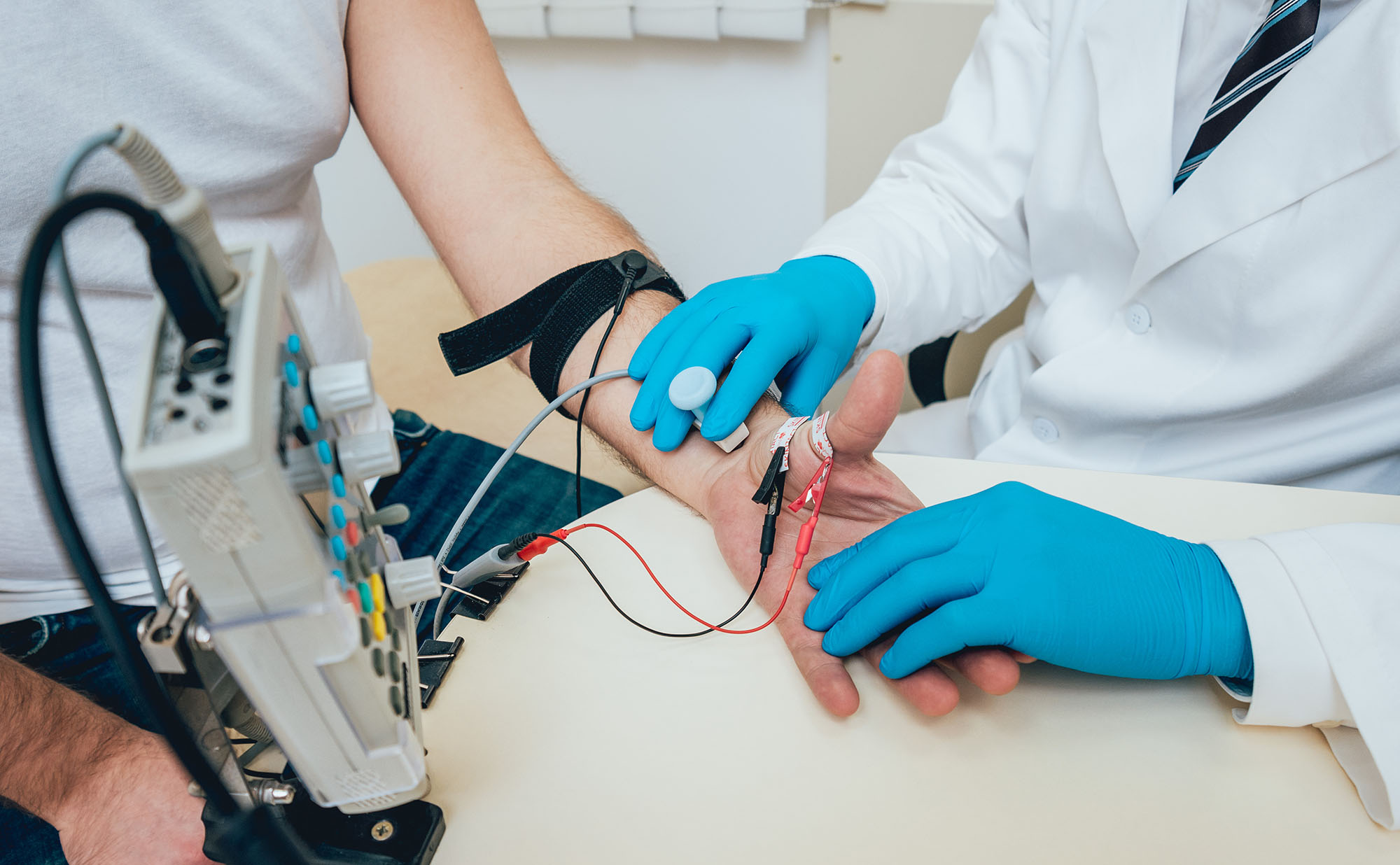
Electromyography (EMG) and nerve conduction studies (also called NCV) are two tests, usually done together, that measure how well your nerves and muscles are working. The nerve conduction study checks how quickly and strongly electrical signals travel along your nerves, while the EMG records the electrical activity of your muscles at rest and as they contract.
Together they help pinpoint where a problem lies, in the nerve or the muscle, and are often used to evaluate neuromuscular disorders and muscle weakness. At Community Neuro Center, EMG/NCV is performed on-site by our neurologist or a licensed technician.
Why it's done
When EMG/NCV is recommended
These studies help find the cause of symptoms such as numbness, tingling, weakness, or muscle pain. Your provider may recommend them to help evaluate:
- Carpal tunnel syndrome and other pinched nerves
- Peripheral neuropathy
- A pinched nerve in the neck or back
- Muscle disorders and other neuromuscular conditions
How to prepare
Before your appointment
- Bathe or shower beforehand, but skip lotions, oils, creams, and powder on your skin the day of the test.
- Wear loose, comfortable clothing that allows access to the areas being tested. If your legs are being tested, wear or bring shorts.
- Leave rings and bracelets at home, or be ready to take them off.
- You do not need to change what you eat or drink, but do not smoke for at least 3 hours before the test.
- Tell us in advance if you have a pacemaker or implanted device, take blood thinners (such as warfarin/Coumadin or aspirin), have a bleeding or immune-system condition, or have had neck or back surgery.
- Keep taking your usual medications unless your provider tells you otherwise.
What to expect
During your EMG/NCV
- For the nerve conduction study, small sensors are placed on your skin and a brief, mild pulse stimulates the nerve. It may feel like a quick tingle or tap.
- For the EMG, a very thin needle is placed into a few muscles to record their activity at rest and as you gently tense them.
- You stay awake and can talk with the provider throughout.
Any discomfort is brief and ends when the test does. There are no lasting effects, and you can drive yourself home.
Does EMG/NCV hurt?
Most people tolerate it well. The nerve conduction pulses feel like brief, mild shocks or taps, and the EMG needle feels like a small pinprick with some aching in the muscle. Any discomfort is temporary and stops when the test is over. The study is safe and does not require sedation.
This information is provided for educational purposes and is not a substitute for professional medical advice. Please talk with your provider about your individual situation.
Good to Know
EMG / NCV: Frequently Asked Questions
Does EMG/NCV hurt?
Most people tolerate it well. The nerve conduction part feels like brief, mild shocks or taps, and the needle EMG feels like a small pinprick with some muscle ache. Any discomfort is short-lived and ends when the test does.
How long does EMG/NCV take?
Plan for the visit to take up to an hour. Many studies take about 30 minutes, but the time varies with how many nerves and muscles need to be tested.
How should I prepare?
Bathe or shower beforehand and avoid lotions, oils, creams, and powder on your skin the day of the test, since they interfere with the sensors. Wear loose clothing (bring shorts if your legs are being tested), leave rings and bracelets off, and do not smoke for at least three hours beforehand. You do not need to restrict food or fluids. Let us know ahead of time if you have a pacemaker or implanted device, take blood thinners such as warfarin (Coumadin) or aspirin, have a bleeding or immune-system problem, or have had neck or back surgery.
What does EMG/NCV diagnose?
It helps identify conditions affecting the nerves and muscles, such as carpal tunnel syndrome, peripheral neuropathy, pinched nerves, and muscle disorders.
Is EMG/NCV safe?
Yes, it is very safe. The needle used for the EMG is thin and sterile. Minor bruising or soreness at a needle site can occur but is uncommon and resolves on its own.
Can I drive home afterward?
Yes. No sedation is used, so you can drive and return to your normal activities right after the test.
We're here to help