
On-Site Diagnostic Testing
EEG (Electroencephalography)
What is an EEG?
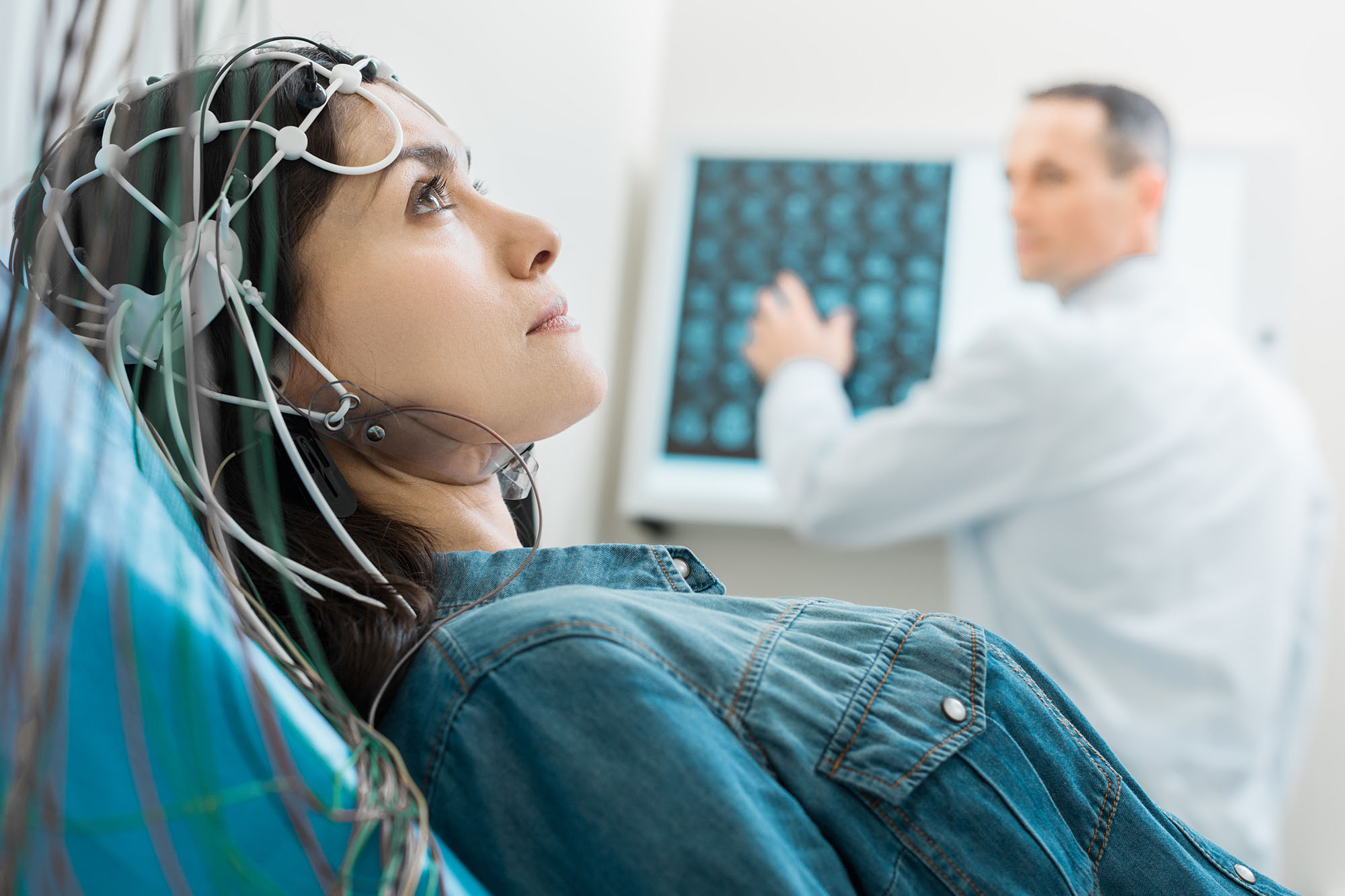
An electroencephalogram (EEG) is a safe, painless test that records the electrical activity of your brain. A technologist places small sensors, called electrodes, on your scalp using a washable paste. These sensors detect the tiny electrical signals your brain cells produce and send them to a computer, where the pattern of your brain waves can be reviewed.
An EEG only records activity, and is often used to evaluate seizures and epilepsy or memory concerns. At Community Neuro Center, it is performed on-site and read by our own neurologist, so your testing and your diagnosis stay under one roof.
Why it's done
When an EEG is recommended
An EEG is one of the most useful tools for evaluating conditions that affect the brain's electrical activity. Your provider may recommend one to help:
- Diagnose and characterize seizures and epilepsy
- Investigate spells of confusion, staring, or altered awareness
- Evaluate memory problems and other changes in brain function
- Assess certain sleep disturbances
How to prepare
Before your appointment
- Come with clean, dry hair. Do not use conditioner, oils, gels, or styling products, since they keep the sensors from making good contact.
- You may eat normally before the test, but it helps to limit caffeine and sugar, since you may be asked to relax or nap during the recording.
- Keep taking your usual medications unless your provider tells you otherwise.
- Wear an old, button-down shirt, which is easy to take off without disturbing the sensors.
- Hair weaves need to be removed before the test, since the sensors have to reach your scalp.
- If you were asked to sleep less than usual for the study, follow those instructions carefully.
What to expect
During your EEG
- A technologist measures your head and attaches small sensors to your scalp with a washable paste.
- You relax in a chair or bed, usually with your eyes closed.
- You may be asked to breathe deeply for a short time, or to look at a gently flashing light.
- For some studies, you may be asked to fall asleep.
When the recording is finished, the sensors are removed and the paste washes out of your hair with water and shampoo.
Does an EEG hurt?
No. An EEG is completely painless. Small sensors only record your brain's natural activity. Nothing is injected, and no electrical current is sent into your body. You may feel the sensors being placed and notice that the paste is cool, but the test itself is comfortable and carries no known risk.
This information is provided for educational purposes and is not a substitute for professional medical advice. Please talk with your provider about your individual situation.
Good to Know
EEG: Frequently Asked Questions
Does an EEG hurt?
No. An EEG is painless and non-invasive. Small sensors are placed on your scalp with a washable paste. Nothing is injected, and no electrical current is sent into your body. The sensors only record the brain's natural activity.
How long does an EEG take?
A routine EEG usually takes about 45 minutes, including the time to attach and remove the sensors. Longer studies, such as ambulatory or prolonged EEG, are worn over 24 to 72 hours to capture activity over time.
How should I prepare for an EEG?
Come with clean, dry hair and skip hair products, oils, and conditioner on the day of the test, since they interfere with the sensors. You may eat normally, but it helps to limit caffeine and sugar, since you may be asked to rest or nap during the recording. Wear an old, button-down shirt, keep taking your regular medications unless your provider tells you otherwise, and note that a hair weave needs to be removed beforehand so the sensors can reach your scalp. For some studies you may be asked to sleep less than usual the night before.
What is an EEG used to diagnose?
An EEG is most often used to evaluate seizures and epilepsy. It can also help assess spells of confusion or altered awareness, memory concerns, certain sleep disturbances, and other changes in brain function.
Can I drive home afterward?
Yes. A routine EEG does not require sedation, so you can drive and return to your normal activities right away, unless you were specifically sedated or asked to be sleep-deprived for the study.
When will I get my results?
Your recording is reviewed, or 'read,' by our neurologist after the test. Results are not available the same day. Your provider will go over the findings and any next steps with you at a follow-up appointment.
We're here to help